Getting Pest Help as a New US Resident
If you are new to the US, pest control can feel confusing fast. ShieldNest helps you understand the problem, learn typical cost ranges, and get matched for free with licensed, state-certified pest control companies near you.
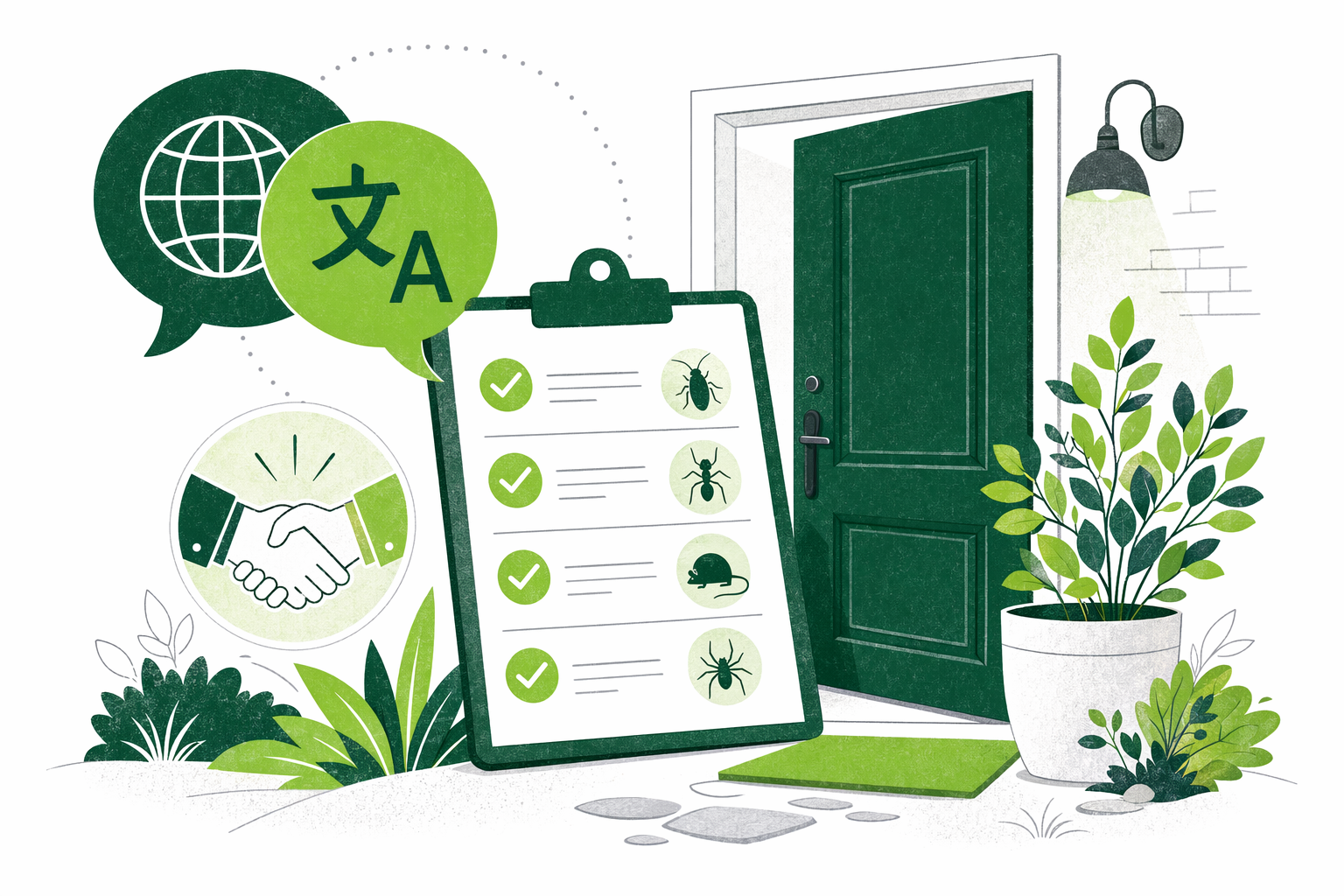
Start with the basics: identify the pest and the risk
Not every bug or animal in a home needs the same response. The first step is to identify what you are seeing and how urgent it is. Ants in a kitchen, mice in a wall, termites in wood, and bed bugs in a mattress all lead to different plans and different costs.
If you are not sure what pest you have, start with a simple guide like identify common house pests. Good photos help. So do notes about where you saw the pest, how often you see it, and whether you found droppings, damage, nests, or bites.
A few things matter right away:
- Where the pest is. Kitchen, bedroom, attic, basement, yard, or business storage area.
- How many you are seeing. One mouse is different from repeated mouse activity.
- Who uses the space. Children, older adults, pets, customers, and food-prep areas all affect safety planning.
- Whether property damage may be happening. Termites, rodents, and some wildlife can damage structures, wiring, insulation, and stored goods.
If you rent, check your lease and tell the landlord or property manager quickly. Responsibility for pest treatment can depend on state and local rules, the type of pest, and how the problem started. ShieldNest does not give legal advice, but it is smart to report the problem in writing and keep photos and dates.
If you want help finding local companies, you can get matched for free. You share the pest issue and your contact details, then you compare your options yourself.
What to look for in a pest control company
In the US, you should hire a licensed, state-certified pest control company and verify the license yourself before you agree to treatment. Rules differ by state, but licensing matters because products, application rules, and safety requirements are regulated.
Use this short checklist:
1. Ask what pest they think it is and why. A good company should explain the signs in plain language.
2. Ask for the treatment plan in writing. You want the pest target, the areas to be treated, how many visits may be needed, and any prep steps.
3. Ask about pesticide safety. Tell them if you have children, pets, asthma concerns, aquariums, or food-handling areas. Read product labels and follow all safety directions around kids, pets, and food.
4. Ask whether lower-toxicity or eco options fit your situation. Sometimes they do, sometimes they do not. You can learn more about eco-friendly pest control.
5. Ask what is included in the price. Inspection, follow-up visits, bait stations, sealing small entry points, traps, monitoring, and warranty terms can vary.
6. Do not feel rushed. Compare the scope of work, not just the lowest number.
For many problems, the best results come from a mix of steps, not just spraying. That can include sanitation, storage changes, fixing moisture, sealing gaps, trapping, monitoring, and targeted treatment where needed. Even then, no one can honestly guarantee a pest will never come back. Re-infestation happens, especially with ants, roaches, rodents, mosquitoes, and bed bugs.
Before any treatment, confirm who will be on site, what products may be used, how long you may need to stay out of treated areas, and what you need to do with food, dishes, toys, pet bowls, and bedding. For a simple safety checklist, see pesticide safety for kids and pets.
Honest cost ranges new residents should expect
Pest control prices in the US can vary a lot. These are typical ranges and estimates, not quotes. The real price depends on the pest, the size and condition of the property, how severe the infestation is, the plan, and your area.
Typical ranges many households and small businesses see:
- One-time general pest treatment: about $150-$350
- Recurring pest control plan: about $45-$120 per visit for quarterly or bi-monthly service
- Rodent control: about $200-$600
- Termite treatment: about $500-$2,500+
- Bed bug treatment: about $300-$1,500+
- Seasonal mosquito service: about $70-$150 per visit
A low starting price may not include follow-up visits or exclusion work. A higher price may include more monitoring, more visits, or better coverage for a larger problem. Ask what happens if activity continues after the first treatment.
Some examples:
- A small ant problem in one kitchen may fall near the lower end of a one-time treatment range.
- Mice in an older building with multiple entry points may cost more because trapping and sealing work can take time.
- Termites and bed bugs often need more specialized work, so prices can rise fast.
If you want more detail by pest type, see costs. If your issue is mice or rats, compare the plan against common rodent control options.
Always get the final scope and price in writing before any treatment. Ask whether prep work, return visits, and special materials are included. That protects you from surprise charges and makes it easier to compare companies fairly.
A simple next step if English is not your first language
You do not need perfect English to get clear help. What matters is giving simple, useful facts.
Try this when you contact a company:
- Name the pest if you know it. If not, say what you see.
- Say where you see it.
- Say how long it has been happening.
- Mention children, pets, or food areas.
- Ask for the plan and price in writing.
You can also keep a short note like this:
- "I see small brown ants in kitchen every morning for 2 weeks."
- "Mouse droppings under sink and in pantry. Have a dog and two children."
- "Found winged insects near window and wood damage in basement."
Then compare your options:
1. Get matched with local companies.
2. Check the license yourself.
3. Compare the written plan, not just the price.
4. Confirm safety steps before treatment.
5. Choose who to hire.
ShieldNest is free to households and small businesses. Participating pest control companies pay a flat fee to be part of the matching network. We do not treat pests or apply pesticides. We help you understand the issue and connect with licensed local companies so you stay in control of the decision.
If you are ready, get matched and compare local help at no cost.
If you are new to the US, start by identifying the pest, then compare a few licensed local companies. Ask for the treatment plan, safety steps, and total price in writing, protect kids, pets, and food, and remember that costs are estimates and pests can come back.