How to identify common house pests
The first step is simple: figure out **what pest you may have** and how urgent it seems. You do not need to guess alone, and you do not need to buy chemicals before you know what you are dealing with.
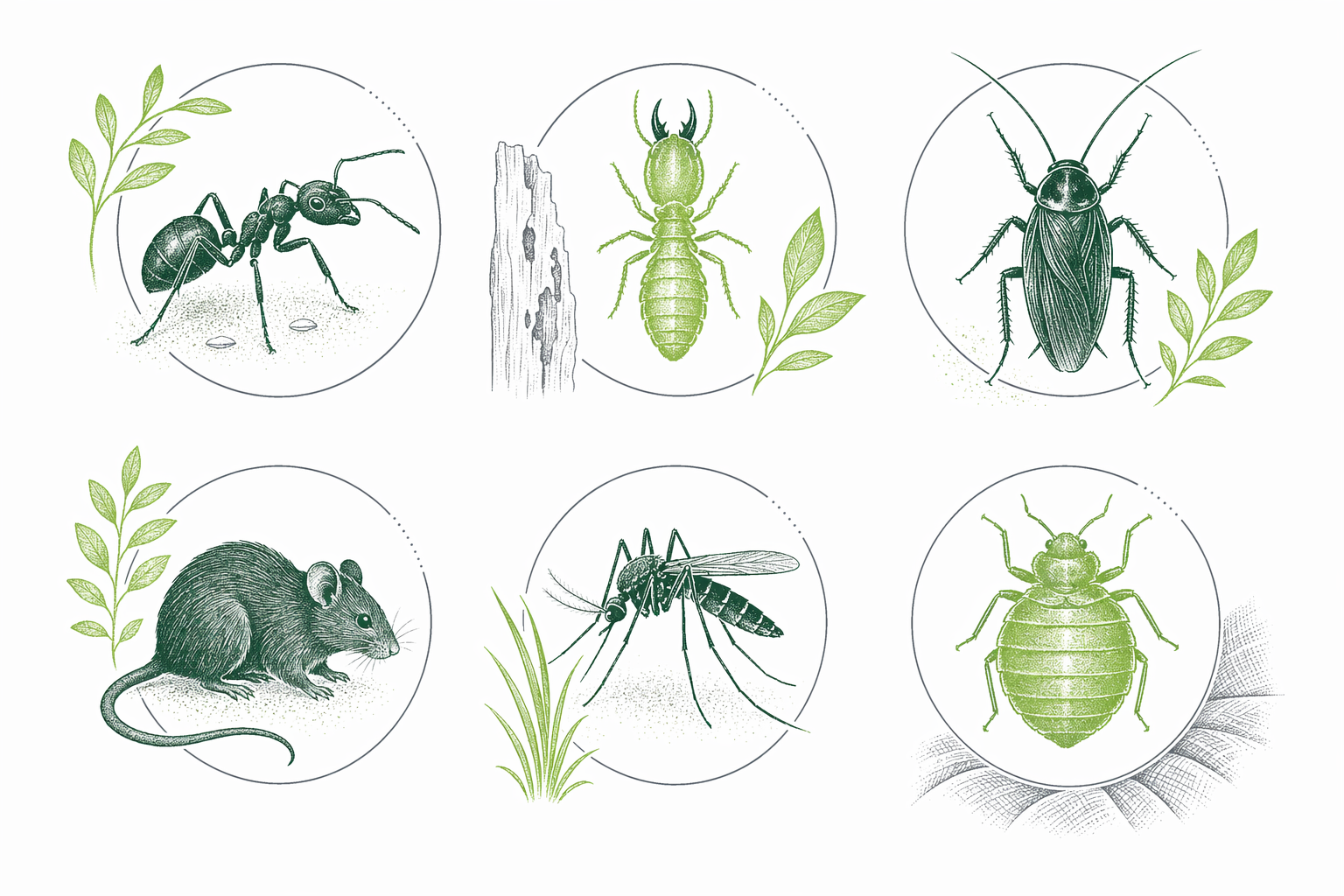
Start with the signs, not the spray
Many pests leave clues before you ever see them. Look for droppings, damage, shed skins, wings, nests, odors, bite patterns, grease marks, and where activity happens. A kitchen pest usually leaves different signs than a wall, attic, crawl space, or yard pest.
A few examples:
- Ants: lines of ants, small dirt piles near cracks, activity around sweets, grease, sinks, pet bowls, or window frames.
- Cockroaches: dark pepper-like droppings, musty odor, egg cases, activity at night near kitchens, bathrooms, drains, appliances, and cardboard.
- Rodents: pellet droppings, gnaw marks, scratching in walls or ceilings, shredded nesting material, greasy rub marks along baseboards.
- Termites: mud tubes, hollow-sounding wood, discarded wings near windows, bubbling paint, tight doors or sagging floors.
- Bed bugs: itchy bites can happen for many reasons, so do not rely on bites alone. Look for tiny ink-like spots on sheets, shed skins, eggs, and bugs in mattress seams, bed frames, and nearby furniture.
- Mosquitoes: more activity at dawn or dusk, standing water nearby, bites after time outdoors.
If you are unsure, compare your clues with common house pests. If you think the problem may be ants, termites, or rodents, these pages may help too: ant control, termite control, and rodent control.
How to tell the most common pests apart
Some pests get mixed up all the time. A careful look at size, shape, color, where you found it, and what damage it leaves can save money and time.
1. Ants vs. termites
Ants have a narrow waist and bent antennae. Termite swarmers have straight antennae, a thicker waist, and pairs of wings that are closer to the same size. If you see mud tubes or damaged wood, do not ignore it.
2. Mice vs. rats
Mice usually leave smaller droppings and fit through very small gaps. Rats are larger, often leave bigger droppings, and can cause heavier gnaw damage. The cleanup and entry-point work may differ.
3. Bed bugs vs. fleas
Fleas are more common around pets and often bite ankles and lower legs. Bed bugs hide close to sleeping areas and leave spotting on bedding or mattress seams. Either way, bites alone are not proof.
4. Carpenter ants vs. termites
Carpenter ants do not eat wood like termites do, but they can tunnel through damp or damaged wood to nest. You may see sawdust-like material called frass. Termites leave different damage and can be far more costly if the issue spreads.
5. Roaches vs. beetles or water bugs
Roaches are usually flatter and fast-moving, often found near moisture, food, or warmth. Species matter because treatment plans and cost can change.
If you cannot tell what you found, take clear photos, note where and when you saw activity, and ask for help getting matched with a licensed company through ShieldNest.
What to do when you find a pest problem
Stay calm. The goal is to gather useful information and reduce risk before any treatment.
- Take photos of the pest, droppings, wings, damage, nests, and the area around them.
- Write down where and when you saw activity. Night? Kitchen? Bathroom? Basement? Around a restaurant back door? This helps a licensed company narrow it down.
- Reduce easy food and water sources. Seal pantry food, clean crumbs, fix leaks, empty standing water, and take out trash.
- Limit hiding spots. Reduce clutter, especially cardboard, paper piles, and stored fabric near walls.
- Do not overuse store sprays or bombs. Wrong products can scatter pests, make identification harder, and create safety risks.
- Protect children, pets, and food. If you use any product, read the label fully and follow all pesticide-safety directions. Keep kids, pets, dishes, and food-prep areas safe. Ask about lower-toxicity or eco options where they fit. This guide can help: pesticide safety for kids and pets.
If the issue seems larger than a small cleanup job, compare typical costs before you hire. One-time treatment often runs about $150-$350. Recurring plans often run about $45-$120 per visit. Rodent control often runs about $200-$600. Termite treatment often runs about $500-$2,500+. Bed bug treatment often runs about $300-$1,500+. Real price depends on the pest, the size and condition of the property, how severe the infestation is, the plan, and your area. These are estimates, not quotes or guarantees.
Common mistakes that make pest problems harder
A lot of people lose time and money here. These are the mistakes we see most often:
- Treating before identifying. Spraying first can hide the evidence you need.
- Relying only on bites or one sighting. Skin reactions vary. One insect may not explain the real problem.
- Ignoring moisture and entry points. Leaks, gaps, door sweeps, vents, and stored clutter matter as much as treatment.
- Waiting too long with termites, rodents, or bed bugs. These problems often get more expensive when they spread.
- Hiring without checking the license. Always hire a licensed, state-certified pest control company and verify the license yourself.
- Not getting the plan in writing. Confirm what is included, how many visits, prep steps, follow-up, and total price before treatment.
- Assuming any company can solve every pest the same way. Methods differ by pest, property type, and local conditions.
For recurring issues like ants, roaches, spiders, or general household pests, a recurring pest control plan may be worth comparing. Just remember: no company should promise a permanent result. Pests can come back, especially if sanitation, moisture, and exclusion problems continue.
Your next step: compare licensed help the smart way
You do not need to become a pest expert overnight. You just need enough information to ask better questions.
Here is a simple next step:
- Identify the likely pest using signs, photos, and location.
- Estimate the urgency. Termites, bed bugs, and rodents usually need faster action than the occasional outdoor ant.
- Get matched for free with licensed, state-certified companies in your area through ShieldNest.
- Compare the plan, not just the price. Ask what pest they believe it is, what treatment they recommend, what prep is needed, whether lower-toxicity or eco-friendly pest control options fit, and how they will help protect kids, pets, and food.
- Verify the license yourself and confirm the price and scope in writing before any treatment.
ShieldNest does not treat pests or apply pesticides. We are a free matching service. Participating pest control companies pay a flat fee to take part. You compare options, choose who to hire, and confirm the safety steps before any treatment.
Look for clear signs before you buy products: what you saw, where you saw it, what damage or droppings are there, and how often it happens. Then compare licensed local companies, verify the license yourself, ask about safety for kids, pets, and food, and get the price and plan in writing before any treatment.