Rodent control — mice & rats
Mice and rats are common, stubborn, and stressful. ShieldNest helps you understand typical costs, compare licensed local pest control companies, and choose a plan that fits your home or small business.
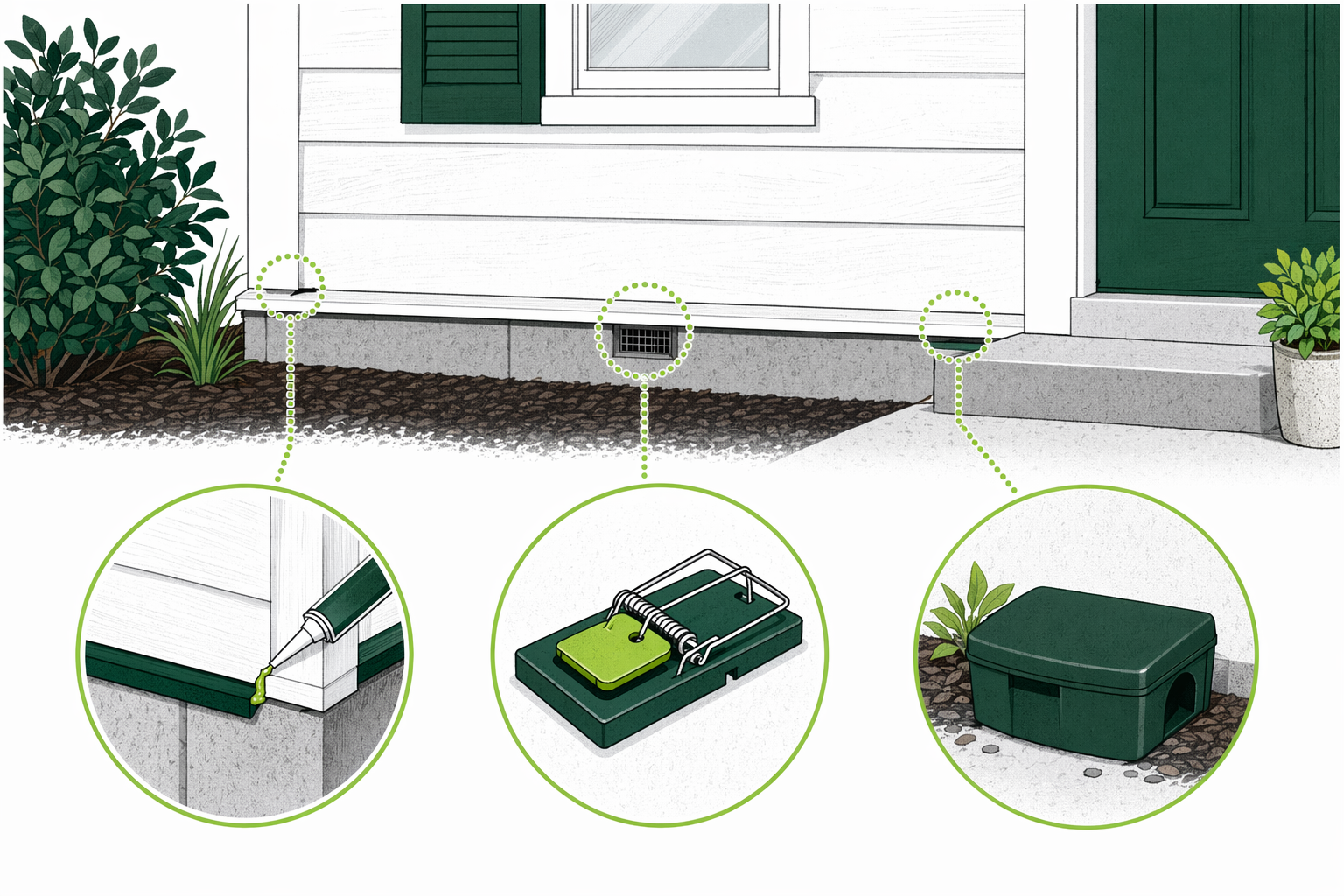
What rodent control usually includes
Rodent control is usually more than setting a few traps. A good plan looks at how rodents are getting in, where they are nesting, and what conditions are helping them stay.
In many homes and small businesses, mice and rats are drawn by three things: food, water, and shelter. They can fit through small gaps, travel inside walls, and return if entry points are not addressed. That is why the cheapest option is not always the best value.
A licensed, state-certified pest control company may offer a plan that includes:
- inspection of likely rodent activity areas
- identifying signs like droppings, rub marks, gnawing, nests, or grease trails
- placing traps or tamper-resistant bait stations where allowed and appropriate
- recommendations for sealing gaps and improving sanitation
- follow-up visits to monitor activity and adjust the plan
If you are not fully sure whether you have mice, rats, or another pest, start with identify common house pests so you can describe the problem clearly when you ask for help.
How the process works
ShieldNest is a free matching service. We do not treat pests, apply pesticides, or inspect properties. We help you connect with licensed local companies so you can compare options.
A typical rodent-control process looks like this:
- You share the pest issue and your contact details.
- You hear from licensed, state-certified pest control companies in your area.
- You ask what is included, what follow-up is recommended, and what the typical price range may be for your situation.
- You compare the plan, safety steps, and written pricing.
- You choose who to hire, or choose no one.
Before you hire anyone, ask them to explain what they are treating, what products or devices they may use, where they may place them, and what you need to do before and after service. Keep children, pets, and food safe. Read product labels and follow all pesticide-safety directions. If you want reduced-risk options, ask whether they offer trapping-first or other eco-friendly pest control approaches where they fit.
If you want to start now, you can get matched for free.
Typical rodent control costs
For rodent problems, a typical treatment range is about $200-$600. Some jobs cost less, and some cost more. The real price depends on:
- whether the problem is mice, rats, or both
- the size and condition of the property
- how severe the infestation is
- whether there are multiple nesting areas
- whether follow-up visits are included
- the plan used and your area
Simple mouse activity in one part of a small home may fall near the lower end. Larger properties, rat activity, repeat visits, crawl-space work, or heavier infestations may cost more.
It is important to think about what is included, not just the first number you hear. One company may quote a lower initial price but leave out follow-up visits. Another may include monitoring, trap checks, or bait-station service in the total.
For general pest issues, one-time pest treatment often runs about $150-$350, while recurring service often runs about $45-$120 per visit. Rodent work is often priced separately because it usually requires more monitoring and exclusion recommendations. You can see broader costs if you are comparing rodent control with other pest services.
Ask for the full plan in writing before any treatment. Confirm whether cleanup, sealing entry points, or repeat visits are included or extra.
One-time service vs recurring service
Sometimes a one-time rodent visit is enough to start control. Sometimes it is not. Rodents can come back, especially if access points stay open or food sources remain easy to reach.
Here is the practical difference:
- One-time service may fit a small, early problem or a customer who wants an initial setup with traps or stations.
- Recurring service may fit ongoing activity, larger buildings, restaurants, storage areas, shared walls, or places where rodents are likely to return.
A recurring plan may include:
- scheduled trap or bait-station checks
- replacing materials as needed
- monitoring for new activity
- updated recommendations for sanitation and exclusion
For many people, the best question is not "What is cheapest today?" It is "What is most likely to reduce activity over the next few months?"
If the company also recommends general pest prevention around the property, compare that separately from rodent work. Some homes benefit from recurring pest control in addition to a rodent-specific plan, but not every property needs both.
Ask the company what success should realistically look like. Honest providers should tell you that rodent activity may decrease over time, not disappear overnight, and that no one can honestly guarantee pests will never return.
Safety steps for kids, pets, and food
Safety matters as much as price. Rodent control may involve traps, tamper-resistant bait stations, sanitation changes, and sometimes pesticide products used according to label directions. Children, pets, and food should always be protected.
Use these questions before any treatment:
- Will you use traps, bait stations, or both?
- Where will products or devices be placed?
- How will you help keep kids and pets away from them?
- Do I need to move food, dishes, pet bowls, or small animals?
- Are there lower-toxicity or trapping-focused options for this situation?
- What should I do if I find a dead rodent between visits?
Good habits also help:
- store dry food and pet food in sealed containers
- clean crumbs, grease, and spills quickly
- take trash out regularly and keep lids closed
- reduce clutter where rodents can hide
- report leaks or moisture problems
If anyone in the home has special health concerns, or if you have pets that roam freely, say so before service is scheduled. Read labels and safety instructions carefully, and review pesticide safety for kids and pets before treatment.
What to ask before you hire a rodent-control company
You do not need fancy words. Short, direct questions work best.
Ask:
- Are you licensed and state-certified for this work?
- Can you tell me your license number so I can verify it?
- What signs make you think this is mice or rats?
- What is included in the price?
- How many visits are included?
- Will you use traps, bait stations, or both?
- Do you recommend sealing entry points, and is that included?
- What safety steps should I take around children, pets, and food?
- What happens if activity continues after the first visit?
- Can you send the plan and price in writing before treatment?
Also ask whether the company handles related issues like insulation damage, crawl-space cleanup, or exclusion repairs, or whether those are referred out. Not every pest control company does structural repair work.
If you are comparing providers, use the same questions with each one. That makes the prices easier to compare fairly. You can review a simple checklist in how to vet a pest control company.
What honest expectations look like
Rodent control works best when there is a clear plan and realistic expectations. The goal is to reduce activity and address the conditions that support it. That can take more than one visit.
Expect a provider to talk about:
- current rodent signs
- likely entry areas
- food and moisture sources
- what treatment tools fit the situation
- what follow-up may be needed
Be careful with promises that sound too perfect. No honest company can guarantee a pest-free property forever. Rodents can return through new openings, neighboring units, trash areas, garages, attics, and wall voids.
The best outcome usually comes from a combination of:
- licensed treatment and monitoring
- sealing gaps and fixing screens or sweeps
- better food storage and trash control
- follow-up when activity continues
ShieldNest helps you compare local options at no cost to your household or business. Participating pest control companies pay a flat fee to be part of the network. You stay in control: you compare, you choose, and you confirm the safety steps and final price in writing before any treatment.
If you are ready to compare licensed local help, start here: rodent control or get matched.
If you have mice or rats, do not focus only on the cheapest first visit. Compare licensed local companies, ask what is included, verify the license yourself, protect kids, pets, and food, and get the treatment plan and price in writing before you hire anyone.