Termite control & treatment
Termites can damage wood slowly and quietly, so it helps to act early. ShieldNest is a **free matching service** that helps you compare licensed, state-certified pest control companies near you so you can understand your options and choose who to hire.
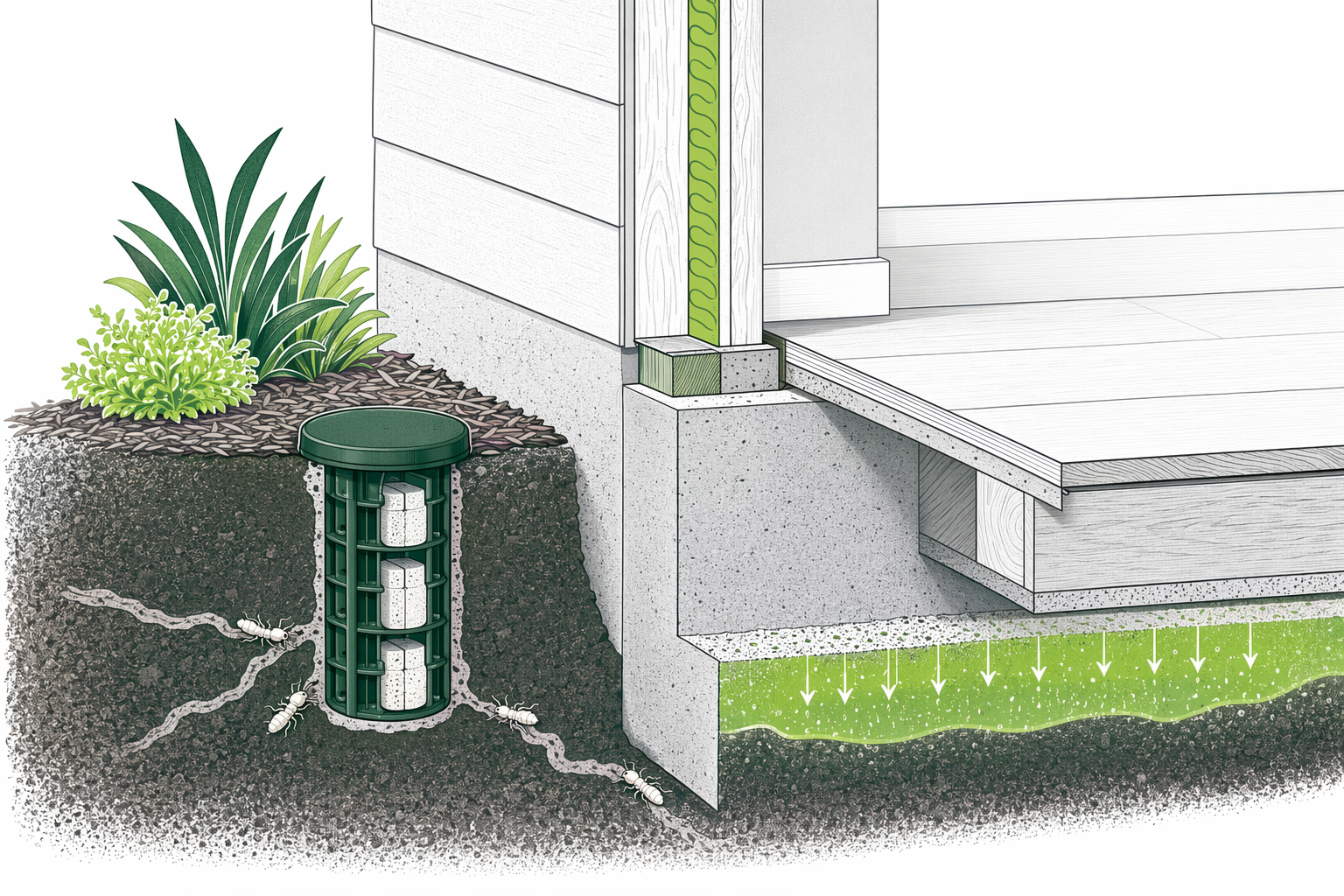
What termite control usually involves
Termite problems are different from many other pests. Ants, spiders, and roaches are often handled with surface treatments or ongoing service plans. Termites usually need a more targeted plan based on where the termites are, how active they are, how your building is built, and how much risk there is of future activity.
A licensed pest control company may recommend one or more of these approaches:
- Inspection and identification to confirm whether you likely have subterranean termites, drywood termites, or another wood-damaging pest
- Localized treatment for a limited problem in a specific area
- Soil treatment or trenching/drilling around parts of a structure when appropriate
- Bait stations and monitoring placed around the property
- Follow-up visits to check activity and maintain the plan
Not every property needs the same method. A slab foundation, crawl space, basement, attached porch, old wood damage, moisture problems, and landscaping close to the home can all affect the plan and price.
If you are not sure whether you are seeing termites, wings, frass, mud tubes, or damage from another pest, start with identify common house pests or get help through ShieldNest matching.
Signs that may point to termites
Termites are easy to miss. Many people do not notice them until there is visible damage or a company points out signs during an inspection.
Common warning signs include:
- Mud tubes on foundation walls, piers, or crawl-space surfaces
- Soft, hollow, or blistering wood around trim, window frames, floors, or walls
- Swarming insects indoors or near doors and windows, especially in spring in many areas
- Discarded wings near windowsills, doors, or light sources
- Doors or windows that suddenly fit badly because damaged wood has changed shape
These signs do not confirm the exact pest by themselves. Carpenter ants, moisture damage, and other conditions can look similar. That is why it is smart to speak with a licensed, state-certified pest control company and verify the license yourself before you hire anyone.
If you already know termites are the issue, you can also read more about termite control options.
How the process usually works
ShieldNest does not treat termites or inspect your property. We help you connect, at no cost, with licensed local companies so you can compare options.
A typical process looks like this:
- Tell us the basic problem. Share the pest issue and your contact details. Do not send sensitive records like SSNs, bank numbers, or immigration documents.
- Get matched with local companies. Participating pest control companies pay a flat fee to receive matches. The matching service is free to you.
- Ask each company to explain the plan. Ask what they found, what treatment they recommend, how many visits may be needed, and what preparation steps apply.
- Compare the details in writing. Confirm the scope, follow-up schedule, warranty terms if any, and total expected cost range before treatment starts.
- Choose who to hire. You decide which company, if any, is the best fit for your home or small business.
This matters because termite work can be a bigger project than standard pest spraying. Prices and methods can vary a lot. Comparing more than one licensed company often helps you understand whether a recommendation is reasonable.
If you want a broader overview of typical pest pricing first, see costs.
Typical termite treatment cost ranges
Termite treatment is usually more expensive than a basic one-time pest visit. A normal one-time general pest treatment might run about $150-$350, but termite work often falls into a higher range because it may involve specialized materials, bait systems, drilling, trenching, more labor, and follow-up monitoring.
A typical termite treatment range is about $500-$2,500+. Some small, localized situations may be on the lower end. Larger structures, harder access, heavy activity, or long-term baiting and monitoring can push the price higher.
Real price depends on:
- Type of termite and how active the infestation is
- Size and condition of the home or building
- Construction type such as slab, crawl space, basement, or complex additions
- Extent of treatment needed around or inside the structure
- Whether monitoring or recurring service is part of the plan
- Your city and state
Important: these are estimates and typical ranges, not quotes or guarantees. Ask each company to put the full price, treatment method, follow-up schedule, and any renewal terms in writing before work begins.
For some properties, a company may recommend an ongoing monitoring plan after the initial treatment. That is different from general recurring pest control for common household pests, and it may be priced differently.
One-time treatment vs ongoing monitoring
Many people ask if termite service is a one-time job or something ongoing. The honest answer is: it depends.
A one-time or initial termite treatment may make sense when:
- A company finds a specific problem area and recommends a focused treatment
- Soil or structural treatment is used as the main control method
- The company believes the issue can be addressed without a full recurring plan
Ongoing monitoring may make sense when:
- Bait stations are used and need regular checking
- Your property has conditions that raise future termite risk
- A company offers periodic follow-up to watch for new activity
- You want continued monitoring after initial control work
What matters most is not whether the plan is called one-time or recurring. It is whether the company clearly explains:
- what they are treating
- what product or system they plan to use
- how long the process may take
- what follow-up is included
- what happens if termites return
No company can honestly promise that termites will never come back. Conditions change, moisture returns, wood stays in contact with soil, and new termite pressure can develop over time. Ask for realistic expectations, not sales hype.
Safety, lower-toxicity options, and prep questions
Termite treatment should always include a conversation about pesticide safety. If treatment is recommended, ask how to keep children, pets, and food safe before, during, and after service. Read the product labels and follow all safety directions.
Useful safety questions to ask:
- Will any product be used indoors, outdoors, in soil, or in bait stations?
- How long do kids and pets need to stay away from treated areas?
- Do food, dishes, pet bowls, or toys need to be covered or moved?
- Are there lower-toxicity or eco-conscious options that may fit this situation?
- What ventilation, cleaning, or re-entry steps are required?
Some termite situations may allow for lower-toxicity approaches or systems with limited exposure, while others may call for different methods based on the structure and severity. A licensed company should explain the tradeoffs in plain language.
Before any treatment, confirm:
- The exact areas to be treated
- The product or system category being used
- Safety steps for people, pets, and food
- Whether drilling, trenching, or follow-up visits are part of the plan
For more help, read pesticide safety for kids and pets and eco-friendly pest control.
What to ask before you hire a termite company
Choosing the right company is not just about the lowest price. It is about clear answers, proper licensing, and a plan that fits your property.
Ask these questions:
- Are you licensed and state-certified for pest control in my state? Verify the license yourself.
- What evidence suggests termites, and what type do you suspect?
- What treatment do you recommend, and why this method instead of another?
- What is the typical total cost range for my situation?
- How many visits are expected?
- Is monitoring included? If yes, for how long and at what cost?
- What preparation and safety steps do I need to follow around children, pets, and food?
- Will you provide the full plan and price in writing before treatment?
- What damage is pest-related versus something a contractor may need to repair?
It also helps to be careful with claims like "lifetime protection" or "guaranteed elimination forever." Termites can return, and property conditions matter. Ask exactly what any warranty or service agreement covers, what it does not cover, and whether annual fees or inspections are required.
If you want help comparing local options, use get matched or learn how to vet a pest control company.
If you think you have termites, do not guess. Compare licensed local pest control companies, ask for the treatment plan and cost range in writing, verify the license yourself, and make sure you understand the safety steps for kids, pets, and food before any treatment.