Ant control
Ants are common, stubborn, and often come back if the source is not handled. ShieldNest helps you understand typical costs and get matched, free, with licensed, state-certified pest control companies so you can compare options and choose what fits.
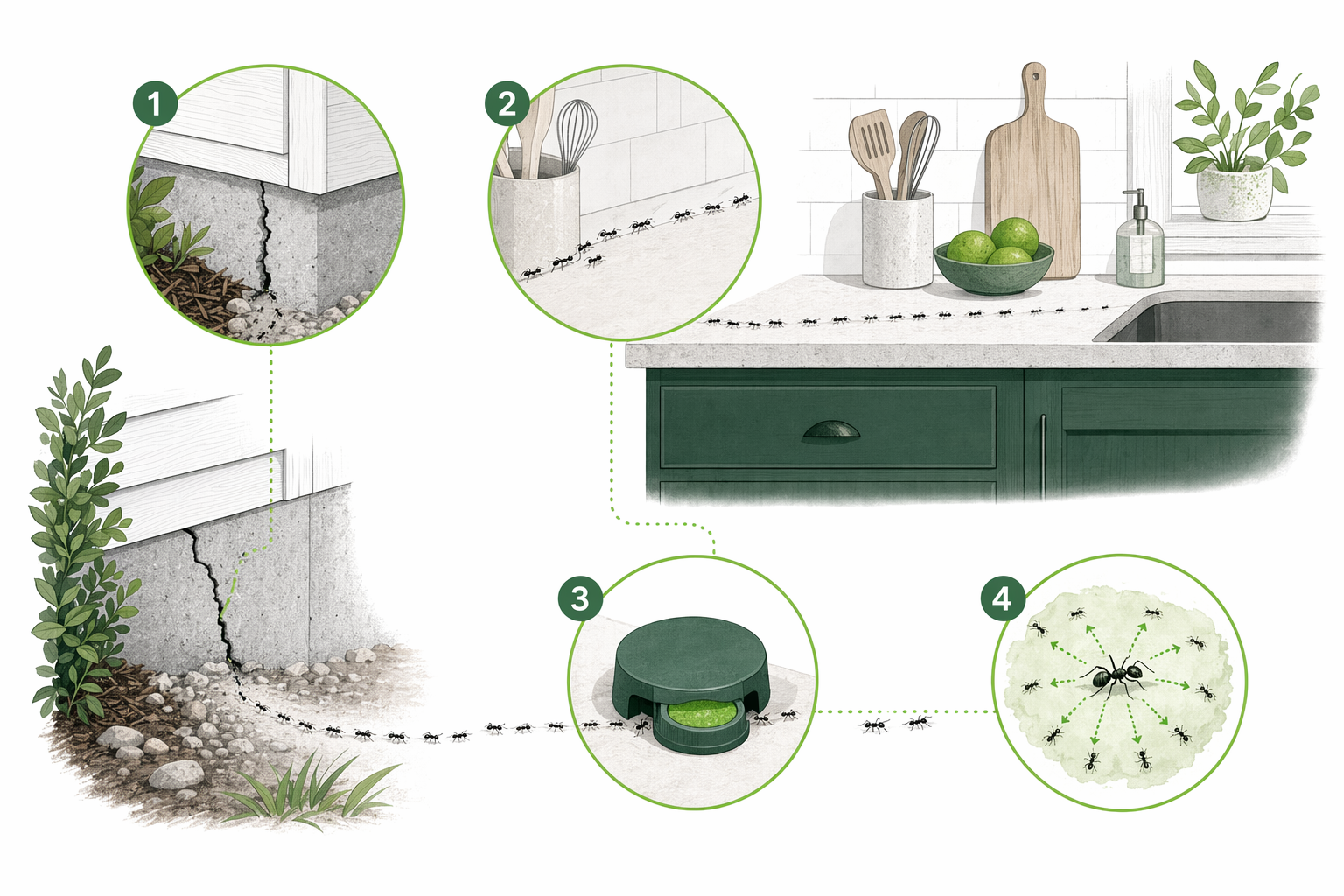
What ant control usually involves
Ant problems can look small at first. A few ants in the kitchen may mean a much bigger colony outside, inside walls, or under a slab. Some species are mostly a nuisance. Others, like carpenter ants, may point to moisture problems and possible wood damage. That is why the right treatment depends on the ant species, where they are nesting, and how severe the activity is.
A licensed, state-certified pest control company will usually build a plan around a few basics:
- identifying the likely ant type and where activity is happening
- looking for food, water, and entry points that attract ants
- using targeted products or bait placements based on the species and location
- recommending cleanup, sealing, and moisture fixes to reduce return visits
- checking whether a one-time service or ongoing plan makes more sense
Good ant control is usually not just "spray and done." In many cases, baiting and follow-up matter more than a heavy initial treatment. If you are not sure what pest you are seeing, start with identify common house pests so you can describe the problem clearly when you ask for help.
How the process works through ShieldNest
ShieldNest does not treat ants or apply pesticides. We are a free matching service for households and small businesses.
Here is the basic process:
- You share the pest problem and your contact details.
- We match you with licensed, state-certified pest control companies in your area.
- You compare their availability, treatment approach, and estimated price range.
- You choose who to hire, if anyone.
There is no cost to you to use ShieldNest. Participating pest control companies pay a flat fee to be part of the network. You stay in control of the decision.
If you want to start now, you can get matched and compare local options. Before any treatment, verify the company license yourself, ask what products may be used, read product labels, follow all pesticide-safety directions, and confirm the plan and total price in writing.
Typical ant control cost range
For most homes, one-time pest treatment often runs about $150-$350. For ant-specific work, many jobs fall in that general range, but some are lower or higher depending on the situation. If the issue is larger, hard to access, or needs repeat visits, the total can increase.
Typical recurring pest control plans often run about $45-$120 per visit on a quarterly or bi-monthly schedule. These plans can make sense if ants keep returning, if your property has regular pest pressure, or if you want ongoing monitoring.
Real price depends on:
- the ant species
- the size and condition of the home or business
- how severe the infestation is
- whether nests are indoors, outdoors, or both
- whether the service is one-time or recurring
- your local area and labor rates
A small trail of pavement ants near one entry point is not priced the same as repeated kitchen infestations, carpenter ant activity near damp wood, or a commercial property with multiple access points.
Ask for an estimate, not a promise. The final price should be confirmed in writing before work starts. If you want a broader look at pricing, see costs.
One-time service vs recurring service
A lot of people ask whether one visit is enough. The honest answer is: sometimes, but not always.
One-time service may fit when:
- the ant activity is recent and limited
- the colony source is fairly clear
- sanitation or entry-point fixes are simple
- you mainly want a targeted response to one issue
Recurring service may fit when:
- ants come back every spring or summer
- the property has ongoing moisture, food, or entry issues
- you run a small business where regular monitoring matters
- there are multiple pest issues, not just ants
A recurring plan can include scheduled follow-up and retreatment as allowed by the plan terms, but it is not a guarantee that ants will never return. Weather, neighboring properties, landscaping, construction gaps, and food sources can all cause new activity later.
If ants are only part of a larger pattern, you may want to compare with recurring pest control to see how ongoing service is usually structured.
Safety, kids, pets, and lower-toxicity options
Pesticide safety matters. If any treatment is being considered, ask the company to explain exactly what will be used, where it will be used, and what you need to do before and after service.
Important safety steps:
- keep children and pets away from treatment areas as directed
- protect or remove exposed food, dishes, and prep items before service if the company tells you to
- ask when it is safe to re-enter treated areas or use the space normally
- read product labels and follow all safety directions
- tell the company about aquariums, pet bowls, children who crawl, or anyone with special sensitivities
You can also ask about lower-toxicity or eco options where they fit. Sometimes bait-based approaches, exclusion, cleanup, and moisture control can reduce the amount of pesticide needed. That does not mean "chemical-free" in every case, and it does not guarantee the same result in every property. But it is a reasonable question to ask.
For more practical steps, read pesticide safety for kids and pets and eco-friendly pest control.
What to ask before you hire an ant control company
Short, direct questions can save money and prevent confusion. Here are good ones to ask:
- Are you licensed and state-certified for pest control in my state?
- What ant species do you think this is, and why?
- What is included in the estimate? Initial visit, follow-up, interior, exterior, baiting, warranty terms, and retreatment policy can differ.
- Will you use baits, sprays, dusts, or a mix? Why is that the right fit here?
- What prep is needed? Ask about food storage, pet safety, and access to rooms.
- How long until I may notice less activity? Some bait jobs can take time.
- What can I do to reduce the chance ants come back?
- Can you put the plan, expected visits, and total price in writing before treatment?
Be careful with promises that sound too certain. No honest company can guarantee a pest will never return. Ants can come back, especially if food, water, and entry points remain available.
If you are dealing with moisture damage or suspect carpenter ants, it may also make sense to ask whether a contractor or other qualified professional should check for repairs. A pest control company handles pest treatment; it should not replace structural, medical, or legal advice.
How to vet a pro and compare estimates
When you get matched with local companies, do a quick side-by-side check. You do not need fancy paperwork. A simple list works.
Compare these points:
- License status: verify it yourself with your state when possible.
- Treatment plan: what they expect to do inside and outside.
- Safety instructions: what they tell you about kids, pets, and food.
- Visit schedule: one-time, follow-up, or recurring.
- Written price: make sure the estimate explains what is included.
- Communication: do they answer clearly, or avoid direct questions?
A lower estimate is not always the better value if it leaves out follow-up, excludes the outside perimeter, or does not explain safety steps. On the other hand, the most expensive option is not automatically the best either. You are looking for a clear plan, fair estimated price range, and a licensed company you feel comfortable with.
For a practical checklist, see vet a pest control company.
Ant control usually costs about $150-$350 for a one-time service, or $45-$120 per visit for recurring service, but the real price depends on the ant type, the size and condition of the property, how bad the problem is, the plan, and your area. Use ShieldNest for free to compare licensed local companies, ask about safety for kids, pets, and food, and get the full plan and price in writing before you hire anyone.