Recurring pest control plans
A recurring pest control plan can help reduce common pest problems over time. ShieldNest is a **free matching service** that helps you compare licensed, state-certified pest control companies near you so you can choose the plan that fits your property, budget, and safety needs.
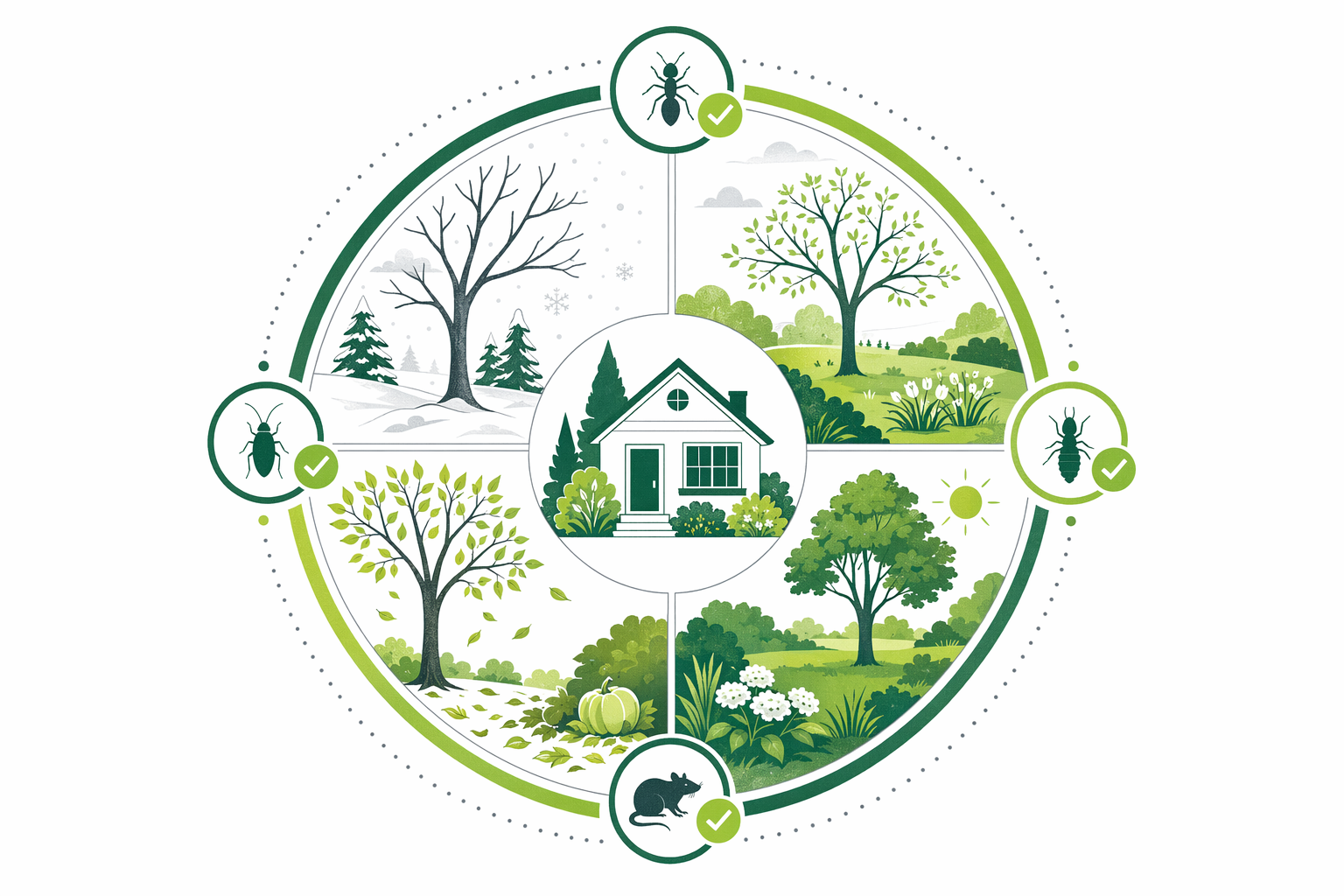
What a recurring pest control plan is
A recurring plan means a pest control company comes on a schedule, usually quarterly or every other month, to look for active pest issues, treat problem areas, and help lower the chance of new activity between visits. It is common for ants, spiders, roaches, silverfish, wasps, and other everyday pests.
For many homes and small businesses, recurring service is less about a one-time fix and more about ongoing prevention and management. That matters because pests can come back. Weather changes, food sources, moisture, clutter, cracks, and neighboring units can all lead to new activity even after a treatment.
A plan may include:
- exterior perimeter treatment
- monitoring for new pest activity
- treatment in targeted indoor areas if needed
- removal of reachable webs or nests, depending on the company
- follow-up recommendations for sanitation, sealing gaps, and moisture control
Recurring plans are not the right fit for every problem. Some pests need a different service entirely. For example, termites, bed bugs, and serious rodent infestations often need a dedicated treatment plan instead of standard maintenance service. If you are still not sure what you are dealing with, start with common house pest identification or get help through free matching.
How recurring service usually works
Most companies follow a simple process. Exact steps vary, and you should confirm the plan in writing before any treatment.
- Initial visit: The company asks what pests you are seeing, where you see them, and how long it has been happening. They may recommend a first service that is more detailed than routine follow-up visits.
- Customized plan: The schedule is based on the pest, your property size and condition, how severe the issue is, and your area. A restaurant, daycare, warehouse, apartment, or single-family home may all need different service levels.
- Routine visits: After the first treatment, visits are usually every 2 or 3 months. Some areas with heavy pest pressure may need more frequent service.
- Between-visit call-backs: Some plans include extra visits if covered pests return between scheduled appointments. Not all plans include this, so ask.
- Review and adjust: A good company will tell you if the current plan is not enough or if a lower-intensity plan may work after the pest pressure drops.
Ask whether the service is mainly for the outside, the inside when needed, or both. Also ask what pests are covered and what pests are excluded. Standard recurring plans often do not cover termites, bed bugs, wildlife, or major rodent exclusion work.
If you want a broader look at ongoing service, see recurring pest control service options.
Typical cost range in the US
Recurring pest control usually costs about $45-$120 per visit for a standard home plan, often billed monthly, quarterly, or every other month. A one-time treatment is often about $150-$350. These are typical ranges and estimates, not quotes.
The real price depends on:
- the type of pest
- the size and condition of the property
- how severe the infestation is
- whether the plan is inside, outside, or both
- the frequency of visits
- your city and state
- whether the company includes free call-backs for covered pests
You may pay more when:
- the problem is established and active in several areas
- the property has many entry points, moisture problems, or sanitation issues
- the business has higher compliance needs, such as food handling or shared occupancy
- you need a separate service for pests not included in a basic plan
For comparison, other common pest services often fall around these typical ranges:
- Rodent control: about $200-$600
- Termite treatment: about $500-$2,500+
- Bed bug treatment: about $300-$1,500+
- Seasonal mosquito service: about $70-$150 per visit
The best move is to compare a few written estimates side by side. You can review more examples on our pest control cost guide.
One-time service vs recurring plan
A one-time treatment can make sense if the issue is small, new, and limited to one pest. A recurring plan often makes more sense if pests keep coming back, the building has ongoing pressure, or you want maintenance through the year.
One-time service may fit if:
- you found a small ant trail and acted quickly
- you had a single wasp nest removed
- you are dealing with a short-term issue after weather changes
- you want to try corrections like sealing gaps and moisture control first
Recurring service may fit if:
- you see pests in different seasons
- you live near woods, water, dumpsters, or shared walls
- you run a small business where pest activity can disrupt operations
- you want monitoring and a regular prevention schedule
- you have had repeat roach, ant, spider, or occasional invader issues
The key is honesty: recurring service reduces risk and helps manage pests, but it does not guarantee permanent eradication. Pests can return. Good control usually combines treatment with practical steps like cleaning up crumbs, storing food well, fixing leaks, reducing clutter, and sealing entry points.
If your main issue is ants, termites, or rodents, a pest-specific service may be a better match than a basic maintenance plan. See ant control, termite control, or rodent control.
Safety matters every visit
When treatment is discussed, ask about pesticide safety first. You should hire licensed, state-certified pest control companies and verify the license yourself. Read the product labels and follow all safety directions around children, pets, and food.
Before any treatment, confirm:
- what products may be used
- where they may be applied
- whether you need to leave the area for a period of time
- how food, dishes, toys, pet bowls, and surfaces should be protected
- when treated areas are safe to re-enter, based on the product label
- whether there are lower-toxicity or eco options that fit your situation
A careful company should be willing to explain non-chemical steps too, such as exclusion, sanitation, trapping, habitat changes, and moisture control. In some cases, these steps are just as important as treatment.
If anyone in the property has asthma, chemical sensitivities, small children, pets, reptiles, birds, or fish tanks, mention that before service is scheduled. Do not guess. Ask the company to explain the product label directions and prep steps clearly.
For a simple checklist, read pesticide safety for kids and pets and ask about eco-friendly pest control options.
What to ask before you sign up
Recurring plans can look similar on the surface, but the details matter. Ask direct questions and get the answers in writing.
Ask these before agreeing to service:
- What pests are covered under the plan?
- What pests are not covered?
- How often are visits scheduled?
- Is the first visit different from later visits?
- Are call-backs included if covered pests return between visits?
- Is there an extra fee for interior service?
- What prep is needed before and after treatment?
- What products or methods are commonly used, and are lower-toxicity options available?
- What is the cancellation policy or contract length?
- Will you recommend repairs or exclusion work, and is that included or separate?
Also ask for a written breakdown of:
- the estimated price range
- the service frequency
- the treatment areas
- the covered pest list
- any guarantees or re-service terms, if offered
- important safety steps around kids, pets, and food
Remember, you compare estimates, you choose who to hire, and you confirm the plan before any treatment. ShieldNest does not perform pest control. We help you connect with local companies so you can review your options without paying a matching fee.
How to vet a pest control company the smart way
Do not choose based on price alone. The cheapest plan can cost more later if it does not fit the real problem.
Use this quick checklist:
- Verify the license in your state. Make sure the company and the person doing the work are properly licensed or certified where required.
- Check the scope. Confirm the plan actually covers the pests you have.
- Read reviews with care. Look for comments about communication, follow-up, punctuality, and whether the company explained safety and prep clearly.
- Ask for the plan in writing. That should include price, visit schedule, covered pests, and any extra charges.
- Discuss safety clearly. Ask how they protect children, pets, and food, and ask whether lower-toxicity options are appropriate.
- Compare at least 2-3 estimates. Similar schedules can have very different exclusions and service levels.
A reliable company should explain what recurring service can and cannot do. Be cautious if someone promises a permanent fix for every pest, avoids written details, or rushes you to sign.
You can use our guide to vet a pest control company or start with free matching to compare licensed local providers near you.
If pests keep coming back, a recurring plan may help manage them over time. Compare 2-3 written estimates from licensed, state-certified companies, verify the license yourself, ask what pests are covered, review safety steps for kids, pets, and food, and choose the plan that fits your home or small business.