Where your pest control money goes
Pest control prices can feel confusing because you are paying for more than spray. The real cost depends on the pest, the size and condition of the property, how severe the infestation is, the plan, and your area.
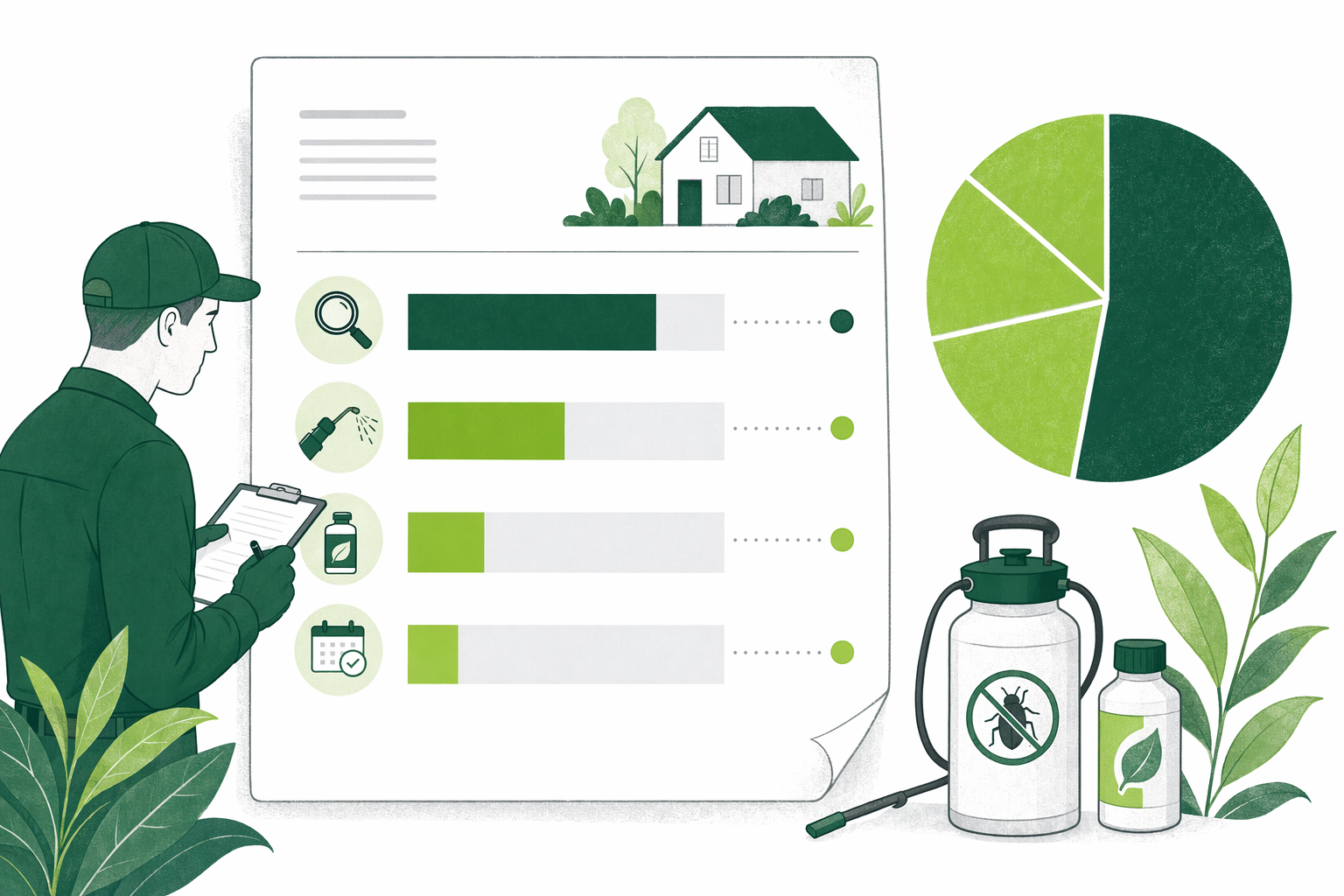
What you are usually paying for
When a licensed, state-certified pest control company gives an estimate, the price often includes several parts of the job. It is not just the product.
Typical ranges: a one-time general pest treatment often runs about $150-$350. A recurring plan is often about $45-$120 per visit. Rodent control is often $200-$600. Termite treatment often falls around $500-$2,500+. Bed bug treatment can be $300-$1,500+. Seasonal mosquito service is often $70-$150 per visit. These are typical ranges only, not quotes. Your real price depends on the pest, property size and condition, infestation severity, the plan, and your area.
A fair estimate may include:
- Time to identify the likely pest problem and decide on a treatment approach
- Labor for setup, treatment, follow-up visits, and monitoring
- Materials such as baits, traps, exclusion supplies, or approved pesticide products
- Travel and local operating costs
- Warranty or service-plan terms, if offered
- Extra work for hard-to-reach spaces, cleanup, sealing entry points, or repeat visits
For example, ants may be cheaper than termites because termite work can involve more time, more specialized products, and more follow-up. Rodent jobs can cost more if exclusion work is needed, such as sealing gaps around pipes, vents, or doors. If you are not sure what pest you have, start with common pest ID help before you compare options.
What makes one estimate higher than another
Two companies can look at the same home and give different prices without either one being dishonest. The scope may be different.
Here are the biggest price drivers:
1. The pest itself
Termites, bed bugs, and rodents usually cost more than a basic general-pest visit. They often need more labor, more visits, and more careful monitoring.
2. How bad the problem is
A few ants in the kitchen is not the same as a long-running infestation in walls, crawl spaces, or multiple units.
3. Property size and layout
Larger homes and many small-business spaces take more time and material. Multi-story buildings, basements, attics, and tight crawl spaces can raise the cost.
4. Condition of the property
Clutter, moisture issues, food debris, cracks, and unsealed gaps can make control harder and increase labor.
5. One-time vs. ongoing service
A one-time treatment may cost more upfront. A recurring plan spreads service out over time and may include monitoring and seasonal prevention. See typical plan ranges on our costs page if you want a broader comparison.
6. Treatment method
Some jobs use baits or targeted products. Others involve traps, dusts, exclusion work, or heat or steam approaches for certain pests. Ask whether they offer lower-toxicity or eco options when they fit your situation.
7. Local market and regulations
Labor costs and state rules vary. Urban areas and high-cost regions are often more expensive.
Whatever method is proposed, keep children, pets, and food safe. Read product labels, follow all pesticide-safety directions, and ask exactly when it is safe to re-enter treated areas. This guide can help you ask the right questions: pesticide safety for kids and pets.
How to compare estimates without getting fooled
The cheapest number is not always the lowest real cost. Compare the plan, not just the price.
Ask each licensed company to put these details in writing before any treatment:
- The pest they believe is present
- The areas they plan to treat or monitor
- The number of visits included
- Whether the price covers follow-up visits
- What prep work you need to do before service
- Whether they plan any exclusion work, cleanup, or sanitation steps
- What products or methods they may use, and whether lower-toxicity / eco options are available
- Safety steps around kids, pets, and food
- Any renewal terms for recurring service
- Any limits or exclusions in a warranty, if offered
Also do these basics:
- Verify the license yourself. Do not just take a logo on a website at face value.
- Ask whether the technician is trained for your specific pest problem.
- Confirm who is responsible for sealing entry points or fixing moisture issues.
- Make sure you know if the plan is a one-time service or an ongoing contract.
If your issue is specific, it helps to compare specialists. For example, termite work should be compared against other termite plans, not against a basic spray plan. See our pages on termite control and rodent control for examples of what can be included.
Common money mistakes people make
A lot of wasted money comes from rushing, not from pests being impossible to control. Pests can come back, and no company can honestly guarantee a permanent result or a health outcome.
Watch out for these common mistakes:
- Hiring without checking the license. Always hire a licensed, state-certified pest control company and verify the license yourself.
- Buying only on price. A very low estimate may leave out follow-up, exclusion work, or key prep steps.
- Not asking what happens after the first visit. Some pests need repeat visits. If that is not included, your total cost may end up higher.
- Ignoring prep instructions. If you do not clean, reduce clutter, store food properly, or follow laundry and access instructions, treatment may work less well.
- Skipping safety questions. Ask how to protect children, pets, and food before, during, and after treatment.
- Treating symptoms but not causes. If leaks, crumbs, standing water, or entry gaps remain, the pest problem may return.
- Assuming every eco claim means safer or better. Ask what the actual method is, where it will be used, and what precautions still apply.
For ongoing prevention, a recurring service can make sense in some homes and businesses, especially where pest pressure is seasonal or constant. Learn what is usually included in recurring pest control.
What to do next if you want fair pricing
You do not need to know everything before you start. You just need a simple process.
- Identify the likely pest. If you are unsure, gather a photo, where you saw it, and when. That helps companies give a more relevant estimate.
- Describe the problem clearly. Share the pest, where you see it, whether it is getting worse, and basic property details. Only give normal contact details and the pest problem details you want help with.
- Get matched with licensed local companies. ShieldNest is a free matching service. We do not treat pests or apply pesticides. You can start here: get matched.
- Compare at least two written estimates. Look at visits, methods, follow-up, safety steps, and prep work, not just the top-line number.
- Confirm safety and the plan in writing. Read product labels, follow directions, and ask how to protect kids, pets, and food.
- Choose who to hire. You compare the options. You decide what fits your budget and comfort level.
If you want a simple checklist before you hire, use our guide on how to vet a pest control company.
ShieldNest matching is free to households and small businesses. Participating pest control companies pay a flat fee to be included. That means you can compare options without paying us to look.
Pest control cost is not just about spray. Ask licensed local companies for written estimates that show the pest, visits, method, follow-up, and safety steps for kids, pets, and food. Then compare the full plan, not just the lowest price.