How to prevent pests around the home
Good prevention lowers the chance of a pest problem, but it does not make your home pest-proof forever. The goal is simple: remove food, water, shelter, and entry points so pests have less reason and fewer ways to get in.
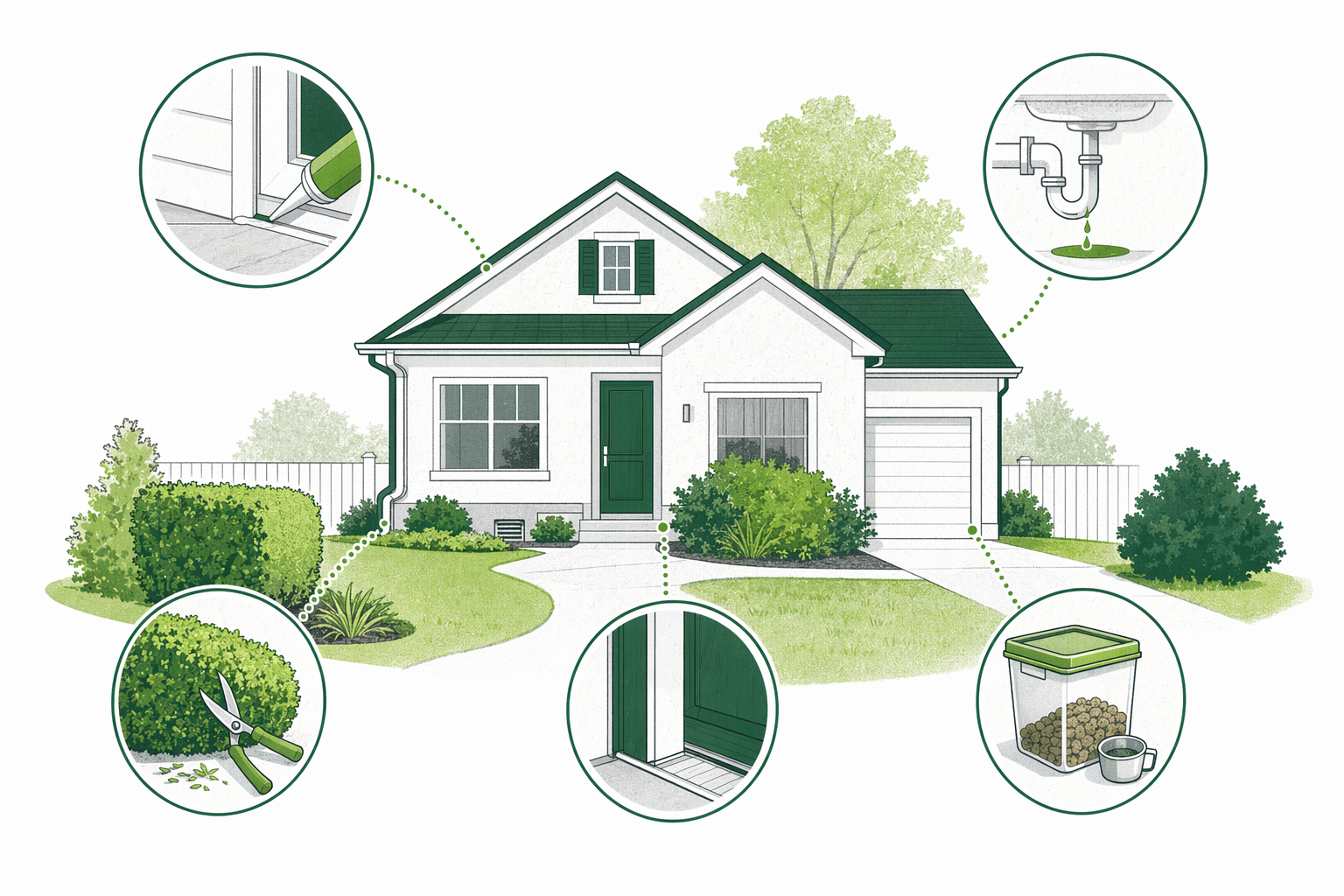
Start with the basics: why pests show up
Most household pests come for the same reasons. They find food, water, hiding spots, and small openings they can use to get inside. If you reduce those four things, you usually reduce pest pressure too.
Common examples:
- Ants follow crumbs, sticky spills, pet food, and moisture.
- Roaches like grease, clutter, cardboard, and damp areas under sinks or behind appliances.
- Rodents look for easy food, nesting material, and gaps around pipes, doors, vents, or foundations.
- Termites are drawn to moisture problems and wood-to-soil contact.
- Mosquitoes need standing water to breed.
Prevention works best when you think in layers. Clean up food. Fix leaks. Seal gaps. Reduce clutter. Watch for early signs. If you are not sure what pest you are dealing with, start with common pest identification.
If a problem is already active, prevention alone may not be enough. In that case, you can use ShieldNest to get matched with licensed, state-certified pest control companies near you at no cost.
The most effective prevention steps you can do this week
You do not need fancy products to make a real difference. These practical steps help most homes and many small businesses.
1. Store food tightly
Keep dry goods in sealed containers. Do not leave fruit, snacks, or baked goods out overnight. Clean under the stove, fridge, and toaster where crumbs collect.
2. Cut off water sources
Fix dripping faucets, sweating pipes, clogged gutters, and wet crawl spaces. Use bathroom fans. Empty trays under houseplants if water sits too long.
3. Take trash seriously
Use trash cans with lids. Rinse recyclables if possible. Move outdoor garbage bins a little away from doors when space allows.
4. Seal entry points
Add door sweeps. Repair torn screens. Seal gaps around utility lines, dryer vents, and foundations. Even small openings can be enough for mice or insects.
5. Reduce clutter
Piles of paper, cardboard, and bags create hiding places. Keep storage a few inches off the floor when possible, especially in garages, utility rooms, and basements.
6. Check the outside of the home
Trim shrubs and tree branches that touch the house. Move firewood away from the foundation. Avoid storing mulch too high against siding.
7. Watch problem zones
Pay extra attention to kitchens, bathrooms, laundry areas, attics, basements, crawl spaces, and around pet feeding stations.
These steps also matter for businesses. Break rooms, storage closets, dumpsters, and receiving areas are common trouble spots.
What to do for the pests people deal with most
Different pests need different prevention habits. A few targeted changes can save you time and money.
Ants
- Wipe up sugary spills fast.
- Seal food and pet treats.
- Trim plants that touch the exterior.
- Fix moisture near sinks and windows.
If ants keep coming back, learn more about ant control.
Roaches
- Clean grease and food residue, not just visible crumbs.
- Do not leave pet food out overnight.
- Empty cardboard boxes and paper clutter.
- Seal gaps around plumbing and under cabinets.
Rodents
- Inspect around garage doors, pipe entries, vents, and crawl-space openings.
- Store bird seed, pet food, and grass seed in hard containers.
- Clean behind appliances and in pantry corners.
- Remove nesting material like loose paper and fabric piles.
For recurring mouse or rat issues, read more about rodent control.
Termites
- Keep wood, lumber, and cardboard off the soil and away from the foundation.
- Repair leaks and drainage problems.
- Keep mulch and soil from covering siding or weep holes.
- Address damp crawl spaces and poor ventilation.
If you see mud tubes, damaged wood, or swarmers, review termite control.
Mosquitoes
- Empty standing water from buckets, toys, flowerpot saucers, and clogged gutters.
- Refresh birdbath water often.
- Reduce dense vegetation where adult mosquitoes rest.
If you want ongoing help, many homes use recurring pest control for monitoring and seasonal treatment. Typical costs are often around $45-$120 per visit for recurring plans, while a one-time general pest treatment often runs about $150-$350. Rodent control is often $200-$600, termite treatment often $500-$2,500+, bed bug treatment often $300-$1,500+, and seasonal mosquito service often $70-$150 per visit. These are typical ranges only, not quotes. The real price depends on the pest, the size and condition of the property, how severe the infestation is, the plan, and your area.
Common mistakes that make pest problems worse
People often work hard and still do not get results because of a few common mistakes.
- Spraying first and ignoring the cause. If food, water, and entry gaps stay the same, pests may come back.
- Using too much product. More is not better. Always read the label and follow all pesticide-safety directions, especially around children, pets, and food.
- Blocking access to monitoring. Pros may need clear access under sinks, near baseboards, attics, or crawl spaces.
- Keeping cardboard everywhere. Cardboard is a common harborage for roaches and a nesting material for rodents.
- Waiting too long. A small issue can become more expensive if pests spread or reproduce.
- Not confirming the plan in writing. Before any treatment, ask what will be done, where, how often, what prep is needed, and what safety steps you should take.
If you prefer lower-toxicity approaches, ask whether the company offers eco or lower-toxicity options that fit your situation. They are not right for every pest or every property, but they can be worth discussing. You can also read about eco-friendly pest control and review pesticide safety for kids and pets.
When prevention is not enough, and how to choose help
Sometimes you do the right things and still have a problem. That can happen in apartments, older homes, shared-wall buildings, damp areas, or during seasonal changes. Pests can come back even after treatment, so honest prevention and follow-up both matter.
When you decide to hire help:
- Choose licensed, state-certified pest control companies. Verify the license yourself.
- Ask for an inspection and written plan. Confirm the target pest, treatment areas, prep steps, follow-up schedule, and total expected cost.
- Ask about safety. Tell them about children, pets, fish tanks, allergies, food areas, and any special concerns. Read product labels and follow all directions.
- Compare more than one option. You compare quotes, you choose who to hire, and you confirm the safety steps before any treatment.
ShieldNest is a free matching service. We help households and small businesses connect with local licensed companies. Participating companies pay a flat fee to be included. There is no cost to you to get matched.
If you want to understand prices before you talk to a company, see our pest control cost guide. If you are ready to compare local options, you can get matched today.
To help prevent pests, remove food and water, seal gaps, reduce clutter, and watch damp or hidden areas. If pests keep coming back, compare written plans from licensed local companies, ask about safety for kids, pets, and food, and use ShieldNest to get matched for free.